As we ease into the second month of the year, many leaders feel pressure to move faster, make quick decisions, regain traction, and prove progress. Ironically, this season has forced me to do the opposite.
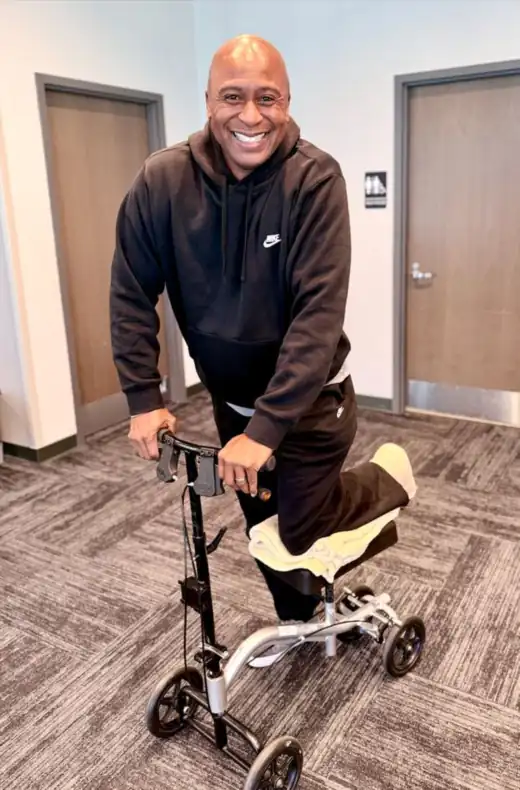
I am currently recovering from a ruptured Achilles tendon. Scooter, splint, surgery, nerve blocks, the whole experience has slowed me down in ways I did not expect or prefer. But slowing down reveals what speed often hides.
Before surgery, I found myself asking a question many leaders quietly wrestle with: How do you lead well when you cannot move the way you are used to?
Lesson #1: Pressure Reveals Strategy or the Lack of One
Before surgery, prayer became my anchor, not as a ritual but as a strategy. I was reminded that Jesus did not pray to escape pressure; He prayed to engage his challenges with clarity, alignment, and authority.
Leadership works the same way.
When pressures like organizational change or market disruptions arise, they reveal whether you have a purposeful strategy or just good intentions.
A purposeful strategy starts with why: Why this role? Why this decision? Why does this season matter? If the why is not clear, the 'how' will not last, and the 'what' will eventually collapse under pressure.
Leadership Insight: If your strategy cannot stand the heat when things get uncomfortable, it was not a strategy. It was optimism.
Lesson #2: Healing (and Growth) Requires Trusting a Proven System
Post-surgery, the nerve block carried me through the most painful days. When it wore off, the sensations were intense: tingling, discomfort, uncertainty. What surprised me most was how easily the mind can misinterpret what the body is experiencing when nerves are involved.
Leadership environments do the same thing. When systems are disrupted, leaders often misinterpret signals:
- Noise feels like failure
- Resistance feels like rebellion
- Slow and steady feels like regression
But recovery, whether physical or organizational, requires trust in a proven system. Every instruction from my doctor and nurses exists for one purpose: healing. The system works if I follow it. My responsibility is not to improvise; it is to align.
Leadership Insight: Boundaries are recovery tools, not restrictions.
Lesson #3: No One Recovers or Leads Well, Alone
One of the greatest lessons from this process has been the power of proactive support. My wife, Sarah, has walked through this with me, anticipating needs, adjusting her rhythm, and offering support and assistance before I ask.
That is not convenience. That is leadership support at the highest level. In organizations, we often wait for someone to ask for help. Strong leadership cultures do not wait; they watch, anticipate, and respond.
Leadership Insight: Proactive support shows up before the request, preventing breakdowns caused by last-minute, reactive leadership that has not thought it through.
This season has reminded me that momentum is not about speed. It is about alignment. A strategy grounded in purpose, a system you can trust, and proactive support, not passive. That is the Momentum Mindset®.
So, where might slowing down help you lead more effectively? Would you like to build this into your leadership culture? If your team is under pressure, facing change, misaligned, or fatigued, I can help you turn this moment into measurable momentum.
Here are three ways we can work together:
- 1Momentum Mindset® Leadership Session (Keynote / Workshop): A high-impact session to reset clarity, build alignment, and strengthen execution.
- 2Leadership Coaching (Individual or Team): Practical coaching that turns pressure into a purposeful strategy and holds leaders accountable to the process.
- 3Consulting for Culture + Change: A structured approach to reduce silos, increase trust, and build a proven system that your leaders can follow consistently.
If you would like to explore fit, email me at info@drsamueljones.com with "MOMENTUM" in the subject line, and I will send you a next-step value-add for you and your organization.
To your momentum,
Samuel
Dr. Samuel Jones, CSP
Founder, Transform Now, Inc.
Share This Issue